The importance of professional boundaries

Maintaining public confidence in the psychoanalytic profession is at the core of what we do.
Maintaining public confidence in the psychoanalytic profession is at the core of what we do.
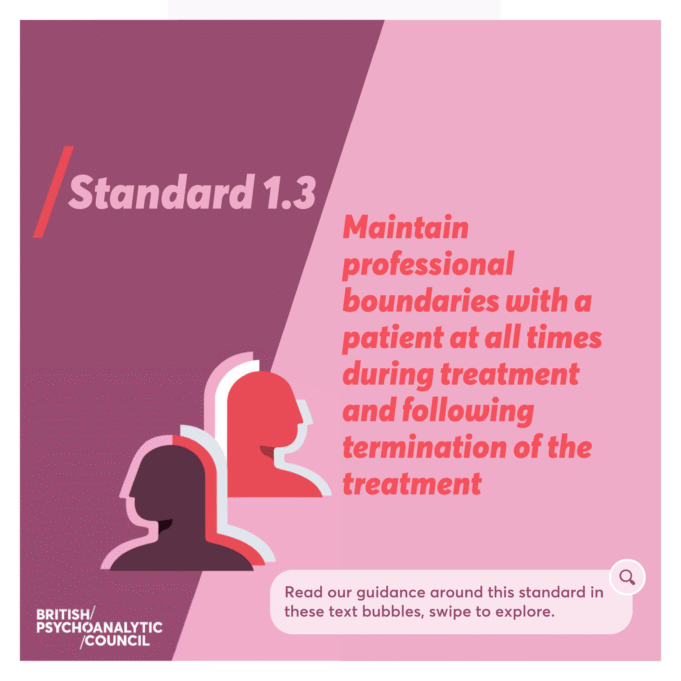
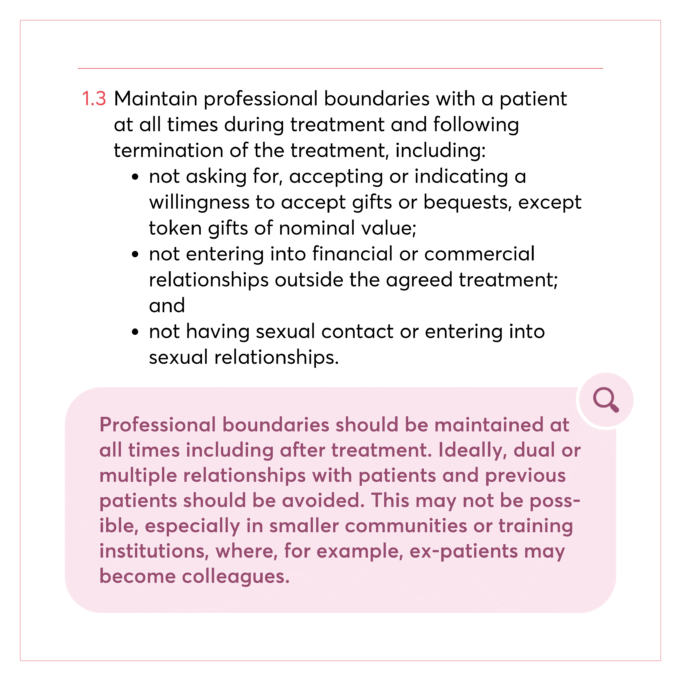
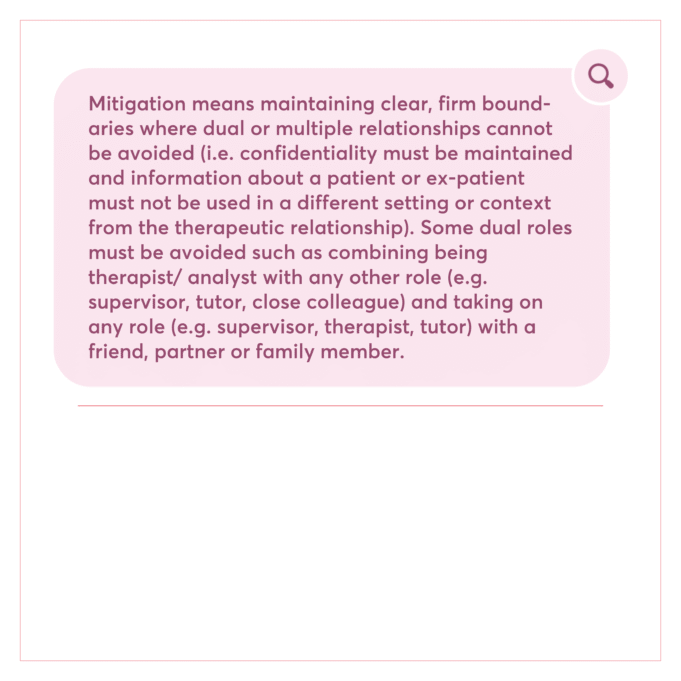
It’s very important that psychoanalytic therapy happens within a safe, trusting setting and it’s the therapists’ duty to protect this setting. This means that there are certain boundaries that must not be violated. For a fruitful therapeutic relationship, your therapist should provide a consistent and appropriate environment that enables and facilitates your work together.
All of our Registrants are bound by ethical standards and an ethical framework that we outline below, this means they must practice safely and without boundary violations. They should not take advantage of their position of power. During your therapy, it is innapropriate for a therapeutic relationship to become romantic, social or sexual in nature.

"Every Registrant of the BPC has a duty to uphold the confidence in our profession. This involves observing and deeply understanding our duty in maintaining boundaries." BPC Chair, Lee Smith.
If you have reason to believe a BPC Registrant has breached professional boundaries as per our standards, please contact us. Visit our concerns page to read our step-by-step guide on reporting a concern. This provides you with transparent guidance around what to have prepared when you are reporting your concern and a rough idea on how long the process may take. Once you’re ready, just fill out the form on the same page and wait to hear from us.
If any of the information on this page feels familiar or triggering to you and you need support now, visit our resource page that lists organations that can provide immediate help.
"Professional boundaries are core to patient safety, we take this very seriously. We have a crucial role to play in continually emphasising their importance and to maintain public confience in the profession." BPC CEO, Greg Ross-Sampson.
As the professional home for our Registrants, our Member Institutions (MIs) uphold our standards and play a crucial role in reinforcing them through trainings and professional events.
All of our Registrants have to be registered with an MI where they have trained. This is also where they may continue their learning through CPD and supervision groups. Our MIs play a very important part within our regulatory model as they help foster relationships within the profession as well as a healthy professional environment for practitioners. The MI is also instrumental when concerns are raised to support the Fitness to Practice process alongside us.
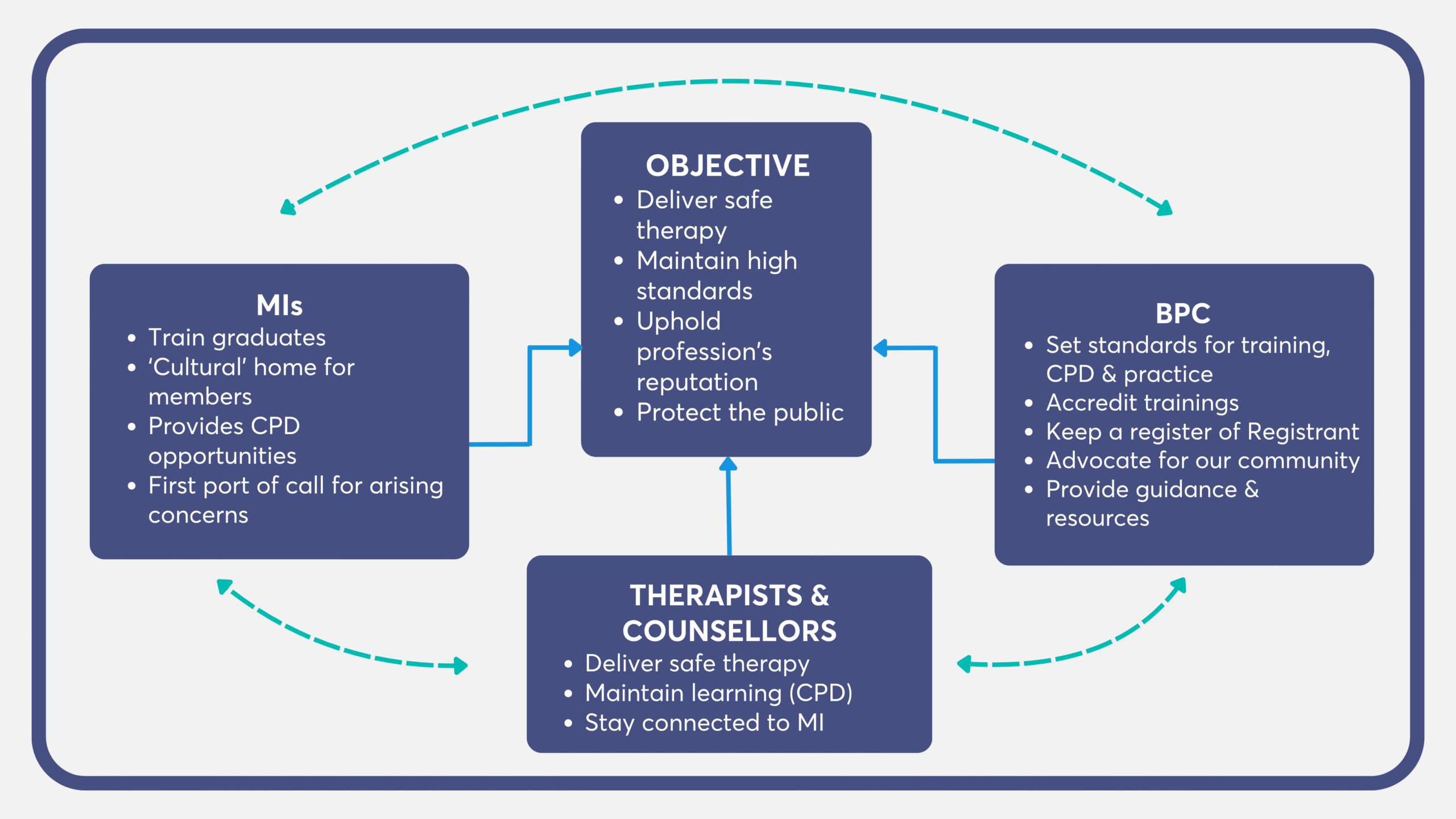
Click here to learn more about our relationship with our Member Institutions and how they work with us to uphold our regulatory duties and look at the image below to understand how different segments of our professional community work together to maintain safe practice.
Explore our other web pages below if you’d like to know more about our Standards of Conduct, our Duty of Candour and therapy and regulation in the UK.