IJP Conference: Violence in the Consulting Room
Book ticketsOrganised by:
The International Journal of Psychoanalysis
Description
Four papers from leading psychoanalysts:
Otto Kernberg, Michael Feldman, Sara Boffito, and Sun Ju Chung.
Chaired by Francis Grier, Editor-In-Chief, International Journal of Psychoanalysis
A recording of the conference will be shared with all those who register. Foreign language subtitles will be available.
Violence takes an infinite number of forms. In recent times, the IJP has explored extreme external violence and its causes. In this year’s IJP Conference, we turn the focus inward, to our specialised area of the consulting room and the psychoanalytic couple. Here, physical acts of violence may still occur, but our main concern will be violence in the transference and countertransference – sometimes overt, but often subtle, including unconscious forms of hostile aggression. This too takes an infinite number of forms.
The psychological violence experienced by many children in the supposedly safe environment of their homes – from parents, siblings and close relatives – may become a dynamic part of their characters, later enacted with the analyst. The roles of violator and victim can move fluidly between analyst and patient. But if this is internalised violence, we must also consider violence arising from the innate character of the young child. Violence can sometimes be on the side of life, and it is not always easy to distinguish this from more spoiling, envious or sadomasochistic forms of violence that generate deep gratifications and addictions, which are notoriously difficult to understand, let alone to shift – and which again are enacted within the analytic couple.
A feature of the conference papers is that these issues will be explored not only in relation to adult psychoanalysis, but also through clinical work with adolescents and young children, in all cases with analytic authors who are leaders in our contemporary field.
Chaired by Francis Grier, Editor-in-Chief of the International Journal of Psychoanalysis, the conference explores these vital psychoanalytic questions of our time.
Papers
Sara Bofitto
“In Search of Existence”: Violence and Narrative Play in the Analysis of a Young Child
Starting from Bion’s concept of “in search of existence” (1965) – which he describes as a psychic force possessing “a completely immoral conscience”, “violent, greedy and envious, ruthless, murderous and predatory” in its determination to possess existence itself – I will explore forms of violence that emerge in analytic work with children. Violent fantasies, narratives and forms of play may give shape to aspects of psychic life that are “a lack of existence that demands an existence.” From this perspective, Bion’s notion of “in search of existence” may be further illuminated by Winnicott’s reflections on primitive motility, ruthlessness and aggression. Through clinical material from the analysis of a severely disturbed child, I will examine how extremely violent and ruthless fantasies – monsters, catastrophic battles, murdered and murderous parents, abandoned infants and epic journeys – may convey urgent emotional truths, and allow aspects of psychic life that are yet to be, still in search of existence. These aspects may first announce themselves through the violence of symptoms and later find voice through imaginative storytelling and narrative play. In these situations, violence may become the language of what is struggling to come into being, while narrative play provides a space in which such developments can be imagined, narrated and lived.
Sun Ju Chung
To Be Found in the Dark: Violence, Attachment, and Object Survival in the Analysis of an Adolescent
This paper offers a clinical account of violence in the psychoanalysis of a male adolescent referred for severe self-harm, suicidal ideation, and profoundly disturbed peer relationships. The patient inhabited an object relational world shaped by profound attachment trauma and primitive anxieties of annihilation, in which intimacy and violence had become inseparable. The central argument is that his violence, directed toward himself, external objects, and the analyst, was not primarily an expression of aggression, but rather a desperate attempt to inscribe his existence in the minds of others and to defend against a catastrophic sense of psychic erasure rooted in earliest infancy. Drawing on Green’s concept of the dead mother complex and Laufer’s notion of failed ownership of the adolescent sexual body, the paper argues that adolescence did not create the violence but rendered it impossible to contain. Clinical material traces the analyst’s sustained experience of helplessness, dread, psychic deadness, and the pull toward retaliation or psychic collapse, as the patient’s attacks repeatedly targeted not only the analyst herself but also her capacity to think, symbolize, and remain emotionally present. Underlying the paper is the question of what it means for an analyst to survive as a living object in a relational field organized around the terror of destruction, annihilation, and psychic erasure.
Michael Feldman
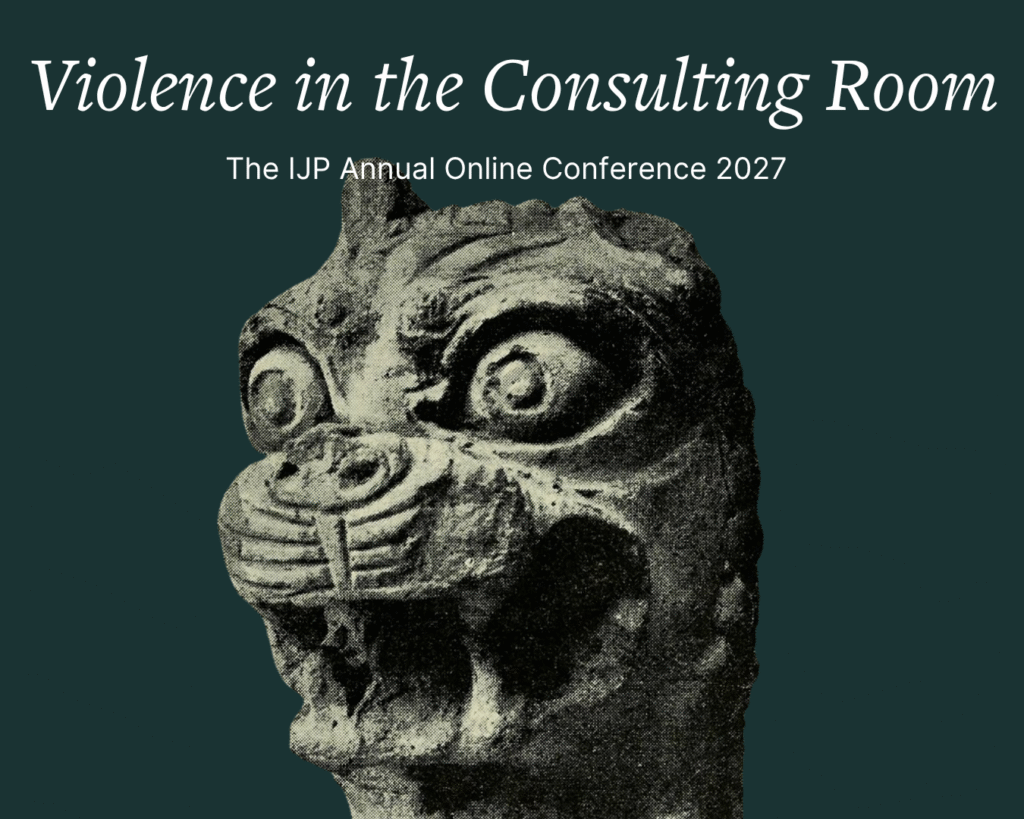
Lamashtu: toxic envy in the environment of the psychoanalytic consulting room
I explore how the ancient Babylonian goddess of envy, Lamashtu, continues her eternal, toxic attacks on creativity and generativity in the privacy of the consulting room today.
Otto Kernberg
Expression and Containment of Rage in the Session
This presentation will stress the importance of the patient’s ability to express his/her rage and destructive intentions to his /her internal objects in the transference. The patient is free to express his /her feelings. Behaviour may include pacing around the room, yelling, but with strict prohibition to physically attack the therapist and physical objects in the office. This limitation must be built into instructions for the patient’s communication in general but reminders may be necessary at this point. The analyst must have clear limits in mind that restrict the patient’s behavior and maintain realistically a sense of the analyst’s control over the situation. If the analyst feels insecure or threatened he/she may have to stop the session and pay attention to that realistic necessity should the situation require it. Potentially violent patients should only be seen in a hospital or safe professional environment that has available resources to protect patient and analyst.
