Considering our Standards: a closer look at the BPC’s Standard 3
The BPC protects the public by holding a set of standards that all of our Registrants must meet. These standards set out how we expect our Registrants to behave professionally and we use them to help us decide the outcomes of our Fitness to Practise processes.
As of April 2025, our Standards, Conduct, Practice and Ethics document came into effect. These standards replace our BPC Code of Ethics and Ethical Guidelines document published in 2011 as the standards all Registrants must meet.
In the Considering our Standards series, we’re looking at each standard with precision from a practice-based perspective and from a regulatory angle. We’ll be talking to experts in our team to break down the importance in each Standard. In this instalment, we’re taking a closer look at: Standard 3.
Any law referred to is subject to amendments by the government, we will review this regularly to make sure what we reference is up-to-date. If you notice any out of date legislation on this page, please contact us.
Standard 3: Raise concerns if patients or others are at risk
What does Joanne, our Director of Professional Practice, say about Standard 3?
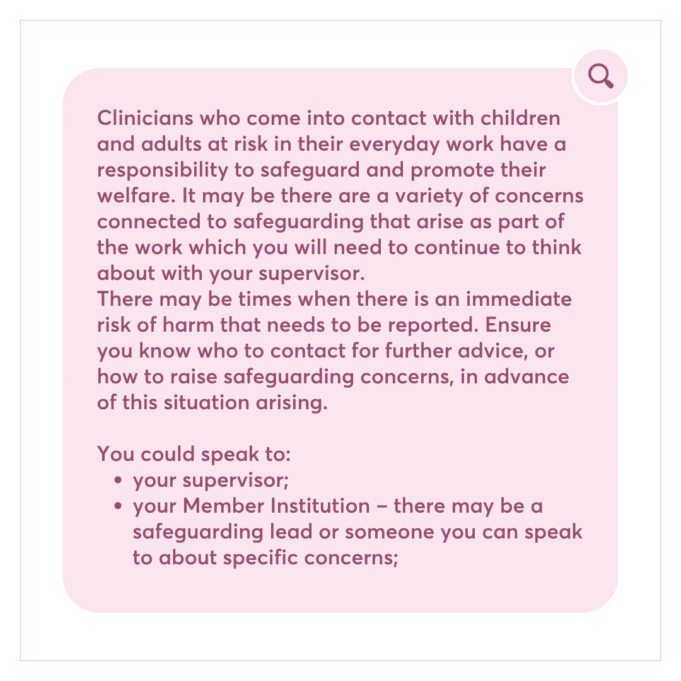
“Clinicians who meet children and adults at risk in their everyday work have a responsibility to safeguard them and protect their welfare. As a Registrant, you are personally responsible for the way you behave and must use your judgement to make informed and reasonable decisions, whilst meeting our Standards.
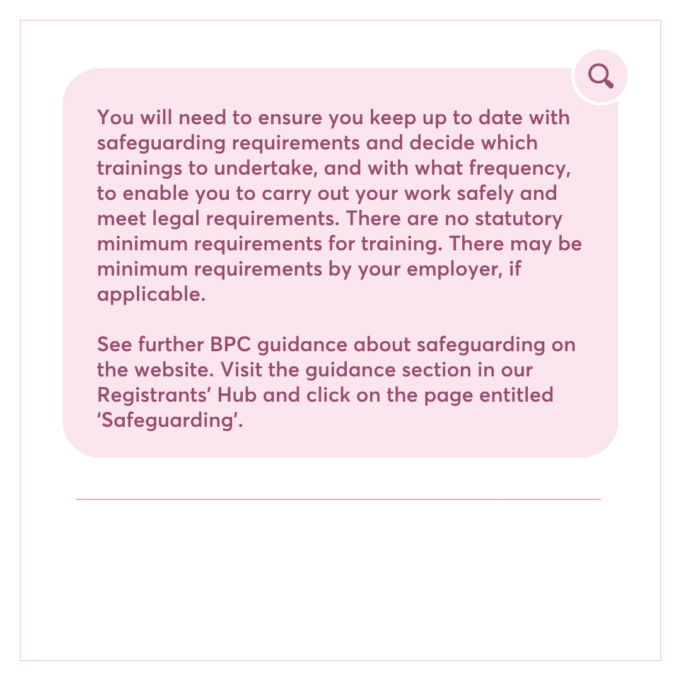
It is important that your training and knowledge are kept up-to-date in this area. It is ultimately your responsibility to remain compliant here. You should attend regular training so that you remain aware of the different types of harm and abuse that can arise and learn how to deal with these. It is good practice for each Member Institution to have a safeguarding lead or panel and to provide their members with safeguarding training.
It is also important that you keep a written record of any safeguarding issues you have been concerned about, even in the cases where you decide not to take action.
There are other considerations you may want to think about around safeguarding such as the setting you’re working in, the context of your work and the support in place for your patient. It’s important to bear psychoanalytic considerations in mind too, like the unconscious, fantasy and transference, and maintain the ability to look at the situation holistically and pscyhoanalytically.“
What does Sharon, our Director of Legal, say about Standard 3?
“You must be aware of all relevant safeguarding legislation and bear this in mind in the context of your own work. It’s also important to report any signs of abuse to the appropriate authorities if you have serious safeguarding concerns for your patient.
Such concerns should be dealt with promptly without undue delay. For example, if you note that a child patient is not safe at home and is disclosing abusive experiences, you must make a written record and report the matter.
Failure to stay proactive and attentive to these areas of concern could result in a Fitness to Practise investigation.”
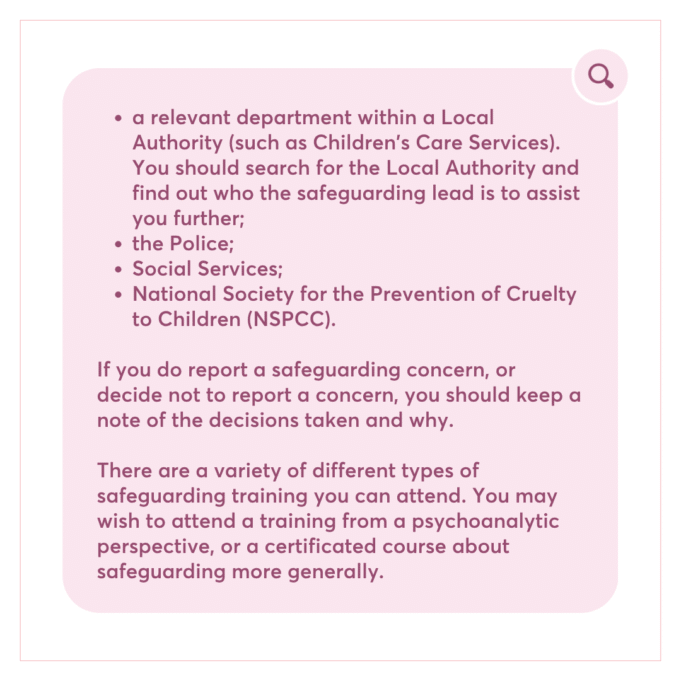
Registrants should not work in isolation when managing a safeguarding or harm related concern. However, if it is an emergency situation and there are concerns of imminent danger, Registrants should contact the police.
If you have a safeguarding concern, discuss this as quickly as possible with your supervisor, a senior colleague, a suitably experienced professional, a relevant safeguarding lead, or a locally named designated healthcare professional to get their advice on the appropriate next steps.
No, if these concerns come up in your work with a patient, it’s important to address them. This may be through reporting your concerns immediately or talking them through with your patient and supervisor. You should keep a written note of the decisions and actions taken and why.
Recently, Parliament passed the Crime and Policing Act 2026. The Act makes reporting allegations of child sexual abuse mandatory only in circumstances where a person under 18 discloses that they have been sexually abused. Click here to visit our webpage that outlines all relevant details of this new act.
If you’re working online, you have to be aware of the specific risks involved when you’re not in the same room with a patient. If you don’t feel that it’s in the patient’s best interests to work online with them, it’s important to consider this.
As stated in Standard 1, you should make the care of your patient your primary concern.
Keep detailed documentation as soon as possible, recording facts and events.
The more detail you can provide, the more this can assist third party authorities in any future investigation.
The factors you consider should be about mitigating, and understanding the level of risk, alongside providing a thoughtful and psychoanalytically informed consideration in order to contain the patient’s fears and anxieties. It might be necessary, during times of high anxiety, to have extra supervision or specialist psychoanalytic consultation.
It’s important that you consider the safety of everyone involved, the potential or actual harm, and the tensions between confidentiality and safeguarding that can arise.
Further links
- The Crime and Policing Act 2026
- Safeguarding Adults: The Role of Health Service Practitioners
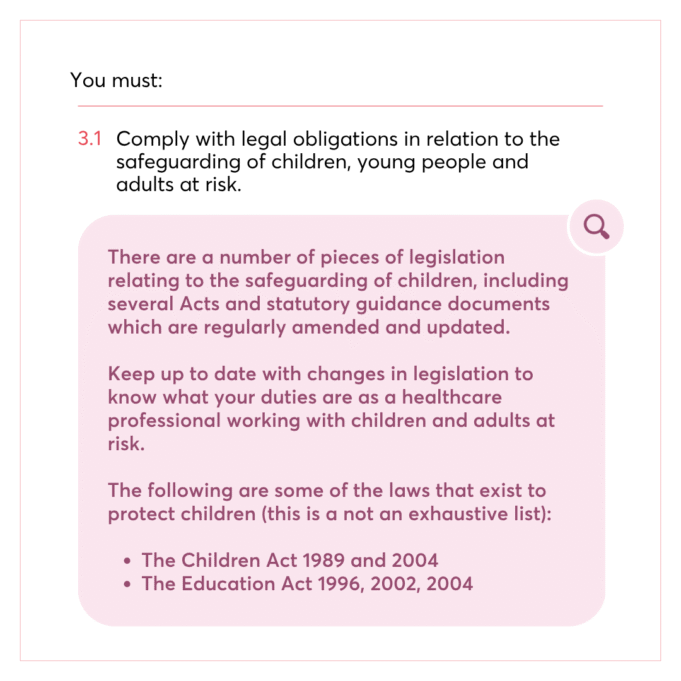
- The Children Act 1989 and 2004
- The Education Act 1996, 2002, 2004
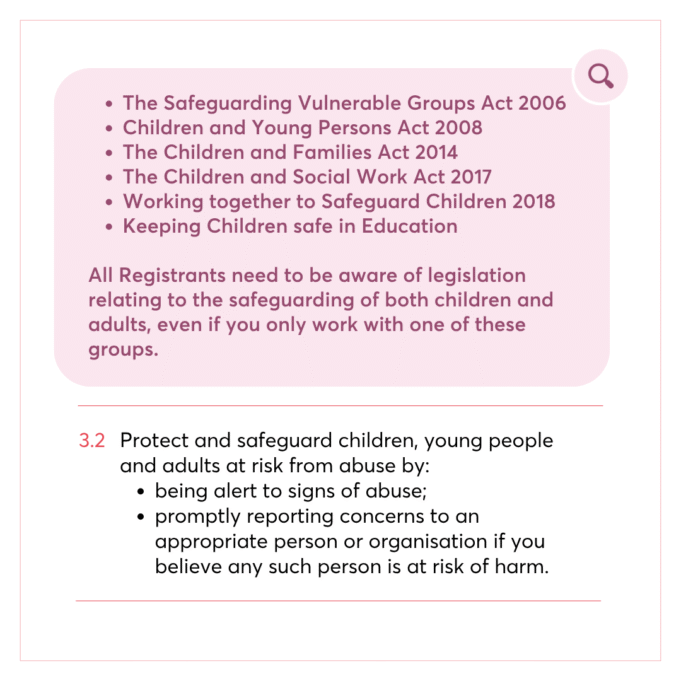
- The Safeguarding Vulnerable Groups Act 2006
- Children and Young Persons Act 2008
- The Children and Families Act 2014
- The Children and Social Work Act 2017
- Working together to Safeguard Children 2018
- Keeping Children safe in Education
- Care Act 2014